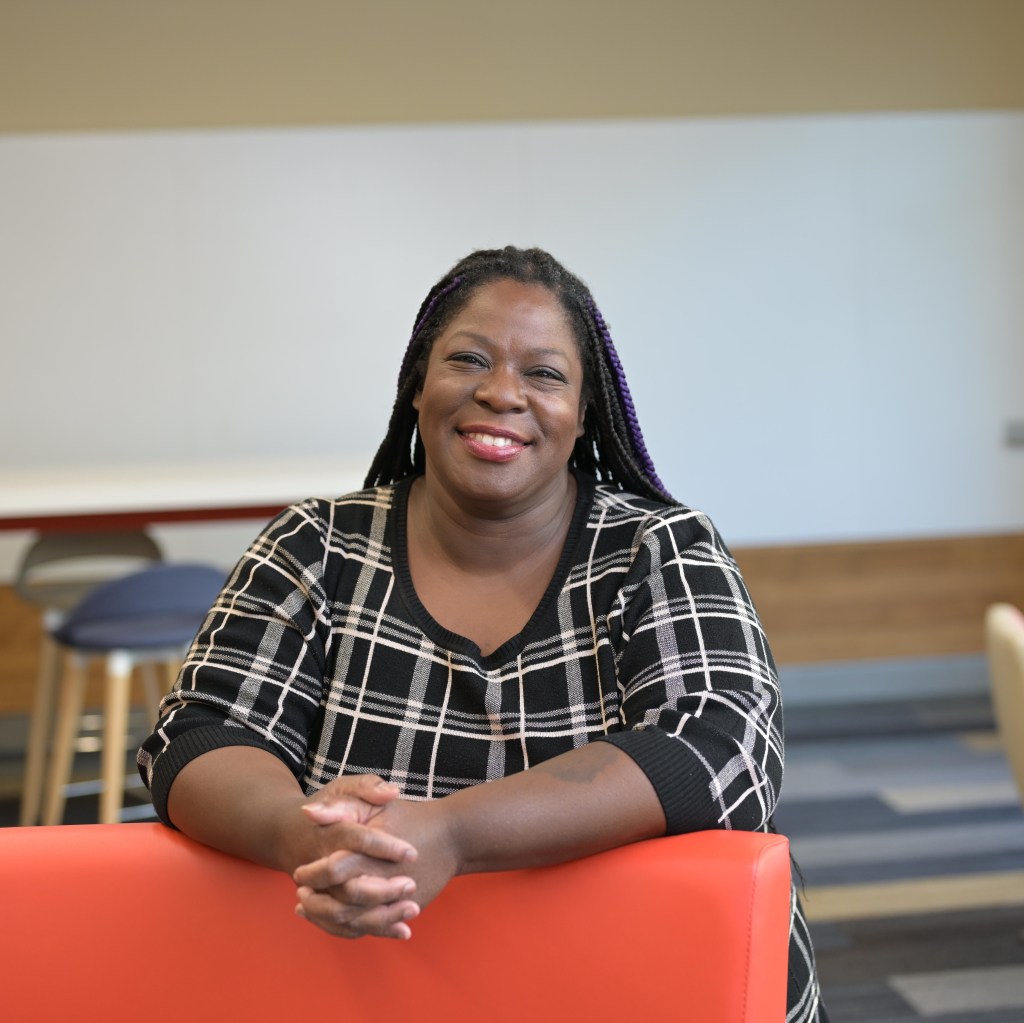
Dr. Kimberly Turner is the director of the CRSS Lab and holds the position of Assistant Professor of International Affairs at University of Pittsburgh’s Graduate School of Public and International Affairs. She returns this year to the Watson Institute at Brown University (she previously held a fellowship at Watson from 2022-2023). Dr. Turner was a International Security postdoctoral fellow at Harvard University’s Belfer Center from 2021-2023.
Dr. Turner received her PhD in political science from Southern Illinois University, Carbondale. Her research focuses on political violence and peace science. Dr. Turner’s work sits at the intersection of comparative political economy and international relations. Her substantive work examines the causes and outcomes of mass movements. Her methodological research seeks to develop new measures of political behavior efficacy.
Her dissertation analyzed the linkages between skilled labor’s employment and wage grievance to the onset and outcomes of contentious politics within authoritarian settings. Dr. Turner’s work has been published in the Journal of Peace Research, American Political Science Association, Social Science Quarterly, Duck of Minerva, and the Global Post.

Dr. Erin Cikanek, Klarman Fellow, Cornell University
I am a political scientist whose research focuses on political psychology, political communication, public opinion, and measurement. My current work focuses on how emotional cues in news media have changed over time and how this change impacts the American electorate. My research also focuses on how changes in emotional states impact support for democratic norms and political violence and how we measure emotion. I am currently a Klarman Fellow at Cornell University. I received my PhD in Political Science from the University of Michigan, with a focus on American Politics and Methods. Prior to Michigan I received my M.A. in Social Science at the University of Chicago.

Tufts University
Liana Woskie is an Assistant Professor in the Department of Community Health at Tufts University and an Adjunct Assistant Professor of Health Services, Policy and Practice at the Brown University School of Public Health. Liana evaluates health system performance and the degree to which systems are held accountable to patients. Her dissertation provides the first quantification of a World Health Organization human rights framework on eliminating coercive female sterilization. She generates contemporary estimates of the prevalence and drivers of uninformed tubal ligation and uses quasi-experimental methods to assess health policies that effect female sterilization practice patterns. Her project: “Quantifying Structural Violence: Female Sterilization and Normalized State Repression in Healthcare,” was awarded a H. F. Guggenheim Emerging Scholar Award for research on causes and manifestations of violence against women and the Horowitz Foundation Trustees’ Award for most innovative approach to theory and/or methodology.

Assistant Professor (Political Science & Geography)
Charmaine N. Willis is an Assistant Professor in the Department of Political Science & Geography and the Graduate Program in International Studies at Old Dominion University. She specializes in contentious politics and US foreign policy, with a regional focus on East and Southeast Asia. Her work has appeared in several academic journals, including the Journal of Political Science Education, Social Movement Studies, International Studies Perspectives, International Studies Review, Global Studies Quarterly, and Terrorism and Political Violence. Prior to joining ODU, Professor Willis was a Visiting Assistant Professor at Skidmore College in Saratoga Springs, NY.
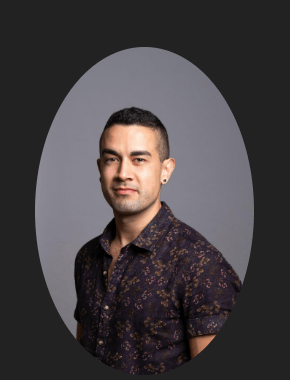
Joshua Babcock
Assistant Professor of Anthropology
Josh Babcock is an Assistant Professor of Anthropology at Brown University. He received his Ph.D. from the University of Chicago in 2022. His research focuses on colonial images and decolonial futures as they get made across media, sites, and scales. Josh’s current book research project, Image and the Total Utopia: Desiring Distinction in Multilingual, Multiracial Singapore, is about the social lives of totalizing colonial images that shape aspirations for racial and linguistic belonging in the modern world. It is also about the desires that not only sustain investments in totalizing colonial images but also exceed and perpetually threaten to undo them.
His emerging work examines images of the state and (liberal) democracy in the U.S. and Southeast Asia; images of indigeneity among 19th-century migrants from British Malaya to New Orleans; and settler-colonial romances centered on the ghost town of Singapore, Michigan. In addition to this, he is working on a project about the Singapore Sling as a contested emblem of a uniquely Singaporean identity. Josh’s work has appeared in American Anthropologist, the Journal of Linguistic Anthropology, Signs and Society, Language & Communication, Visual Anthropology Review, Society and Space, and the Journal of Southeast Asian Media Studies. Josh regularly publishes as a member of the editorial and authorial collective, South/South Movement. His work has been supported by Fulbright and the Ruth Landes Memorial Research Fund, among others. He is committed to inclusive, antiracist, and culturally sustaining pedagogy in and outside the classroom. His broader teaching and research interests include sociocultural and linguistic anthropology; raciolinguistics; social movements; desire, gender, and sexuality; inter-colonial histories and decolonial practice; verbal art and performance; science, technology, and society (STS); critical placemaking; and collaborative public pedagogies.
 CRSS Lab